Choosing the best time to climb Mount Kilimanjaro can make a big difference in your overall experience on the mountain. Weather conditions affect trail comfort, summit visibility, and temperatures during the climb. Tanzania has two main climbing seasons that are considered the most reliable for travelers planning a Kilimanjaro adventure.
The most popular months to climb Kilimanjaro are January to March and June to October. January and February are slightly warmer with clearer skies and fewer crowds compared to the middle of the year. June through October is cooler and very popular because the trails are usually dry and visibility is excellent, especially during summit night. These months are ideal for travelers who want stable weather and comfortable trekking conditions.
Summit Success Tip
Choosing an 8-day Lemosho or 9-day Northern Circuit route gives your body the absolute best chance to acclimatize naturally, raising your summit success rate above 95%.
Rainy seasons on Kilimanjaro usually happen from March to May and again during November. Climbs are still possible during these months, but trails can become muddy and visibility may be limited by clouds and rain. Some experienced hikers prefer quieter trails during the rainy season, especially on routes like Rongai which stay drier than the southern routes. Travelers planning a rainy season climb should prepare with proper waterproof clothing and extra layers.
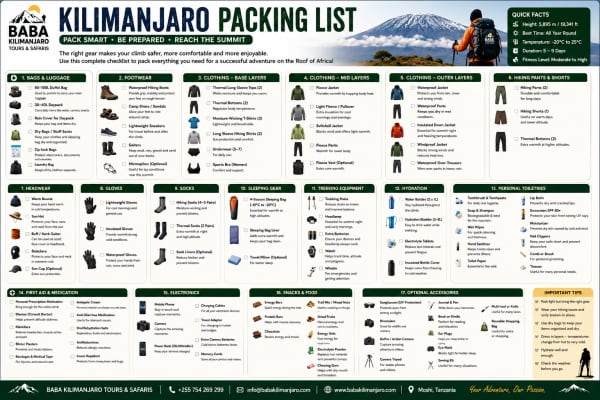
Packing the right gear for Kilimanjaro is extremely important because the mountain includes several climate zones. You may start the trek in warm rainforest conditions and end the climb in freezing temperatures near the summit. Layering is the best approach. Essential clothing includes moisture-wicking base layers, insulated jackets, waterproof outer shells, thermal pants, gloves, warm hats, and hiking socks. Good quality hiking boots that are already broken in can help prevent blisters and discomfort during long trekking days.
A comfortable backpack and sleeping system also improve the overall experience on the mountain. Most climbers carry a small daypack with water, snacks, extra clothing, sunscreen, and personal items while porters carry the larger duffel bags. A warm sleeping bag rated for cold temperatures is important for overnight camps, especially on higher routes where nighttime temperatures drop significantly.
Many travelers underestimate the importance of smaller items during a Kilimanjaro climb. Sunglasses, sunscreen, lip balm, trekking poles, reusable water bottles, headlamps, and power banks are all useful during the trek. Summit night usually begins around midnight, so a reliable headlamp with spare batteries is essential for safely reaching Uhuru Peak before sunrise.
Physical preparation before arriving in Tanzania can also make the climb more enjoyable. Regular walking, hiking, stair climbing, and light endurance training help build stamina before the trek. However, altitude affects every climber differently, so even very fit travelers need enough acclimatization time on the mountain. Choosing a longer route often gives a better overall experience and improves summit success rates.
Working with an experienced local Kilimanjaro operator helps travelers prepare properly before arrival. Good operators provide equipment checklists, rental gear options, experienced guides, and altitude safety support during the trek. Taking time to plan carefully, choose the right season, and pack correctly allows travelers to enjoy the climb more comfortably while experiencing one of Tanzania’s most rewarding adventures.
Frequently Asked Questions
When is the absolute best month to climb Kilimanjaro?
January, February, and September are widely considered the best months because they offer clear summit nights, warm daytime temperatures, and minimal rainfall.
Is climbing during the rainy season recommended?
Only if you are an experienced trekker who prefers quiet trails. The Rongai route is the best choice during rainy season as it receives much less precipitation than the southern routes.
How many days does it take to climb Kilimanjaro?
Tours range from 5 to 9 days. We strongly recommend choosing a 7 or 8-day route for safe, gradual altitude acclimatization.
Plan this with local support
Tell us your dates, pace and priorities. We will help turn the idea into a clear Tanzania plan.
Enquire